Innovation starts with the challenge

In rock processing, the demands on performance rarely stand still. Materials change and production requirements increase. Equipment is expected to run reliably under demanding conditions, while customers face growing pressure to improve efficiency, reduce downtime, maintain safety, and make better use of resources.
Meeting these demands requires a constant willingness to rethink how things are done. Sometimes, that means refining an established design. Other times, it means questioning established engineering assumptions, developing entirely new capabilities or finding better ways to solve problems that have existed for decades.
This is where innovation becomes essential to eco-efficient rock processing. Not as technology developed for its own sake, but as a continuous effort to address real operating challenges – supported by advanced engineering, deep application knowledge, and close customer collaboration.
The results may be easy to describe: more reliable production, easier maintenance, better control or improved resource efficiency. Delivering them, however, can take years of development, testing and refinement.
Rethinking established designs
Consider the challenges associated with maintaining a cone crusher. In demanding applications, every maintenance intervention needs to be planned around production requirements, equipment availability, and the safety of the people performing the work. Reducing the time or complexity of a critical maintenance task can make a meaningful difference to the operation.
The Sandvik CH442 and CH662 cone crushers, introduced in 2026, address one such challenge. Their backing-compound-free design eliminates the need to mix and pour backing compound during liner changes, along with the associated curing time.
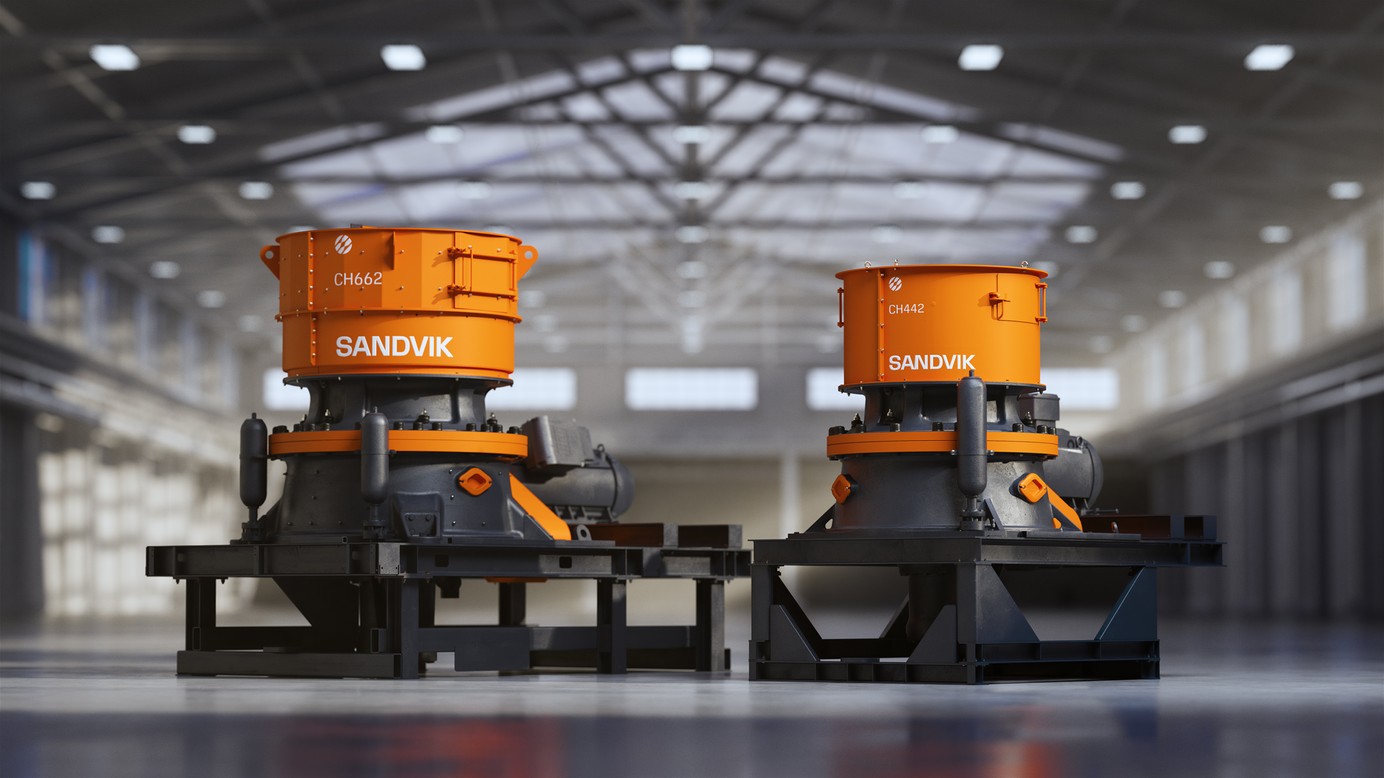
“The wear-part attachment presented some challenges for the project,” says Andreas Bengtsson, Lead Mechanical Design Engineer at Sandvik. “We had to revisit parts of the design before arriving at a relatively simple solution with the new filler ring attachment.”
The redesigned parts were tested under demanding conditions at a customer site. Following the successful trial, the customer purchased the test parts and decided to adopt the new design for future purchases, particularly appreciating the elimination of backing-compound handling.
Removing a long-standing maintenance requirement is one form of innovation. Other advances introduce capabilities that fundamentally change how the equipment operates.
Changing what’s possible
This was the case with the Blueprint Jaw Crusher chamber platform, developed by the Sandvik mobile crushing and screening team. Customers were looking for greater output, improved uptime and safer, easier operation. The platform enables automatic control of the closed-side setting to support productivity, as well as detection of wear within the crushing chamber – both firsts for Sandvik jaw crushers.
Once the desired product size is selected, the system automatically recalibrates at regular intervals to help maintain consistent output. Components within the chamber’s toggle setting system have also been redesigned to extend their service life and reduce maintenance requirements, while digital monitoring and feedback support more predictive maintenance.
 The difficulty lay in reliably measuring and automatically adjusting the crusher setting despite heavy loads, vibration, and on-going wear.
“Rather than move away from a proven design, we chose to rethink one of its most critical parts,” says Patrick Forrest, VP R&D and Product Management, Rock Processing. “Making measurement and automatic adjustment work reliably under such demanding conditions was the real challenge – and solving it became one of the new platform’s greatest strengths.”
Developed around real operating conditions
At HH-Basalt’s Oberscheld operation in Germany, a phased plant modernization project had to accommodate an existing plant that needed to remain in production. One important requirement was to make the screening equipment easier to access and maintain, while ensuring effective dust containment and noise reduction.
Working with engineering partner LSE GmbH, Sandvik developed lightweight dust covers made from glass-fibre-reinforced polymer (GFRP) sandwich panels for the screening units. Unlike conventional steel covers, the new design allows single-person handling and can be installed or removed within a maintenance window of approximately one hour. For the people working with the equipment, the benefits are tangible. Faster, easier access helps reduce the effort involved in maintenance, while improved dust and noise control supports a safer working environment.
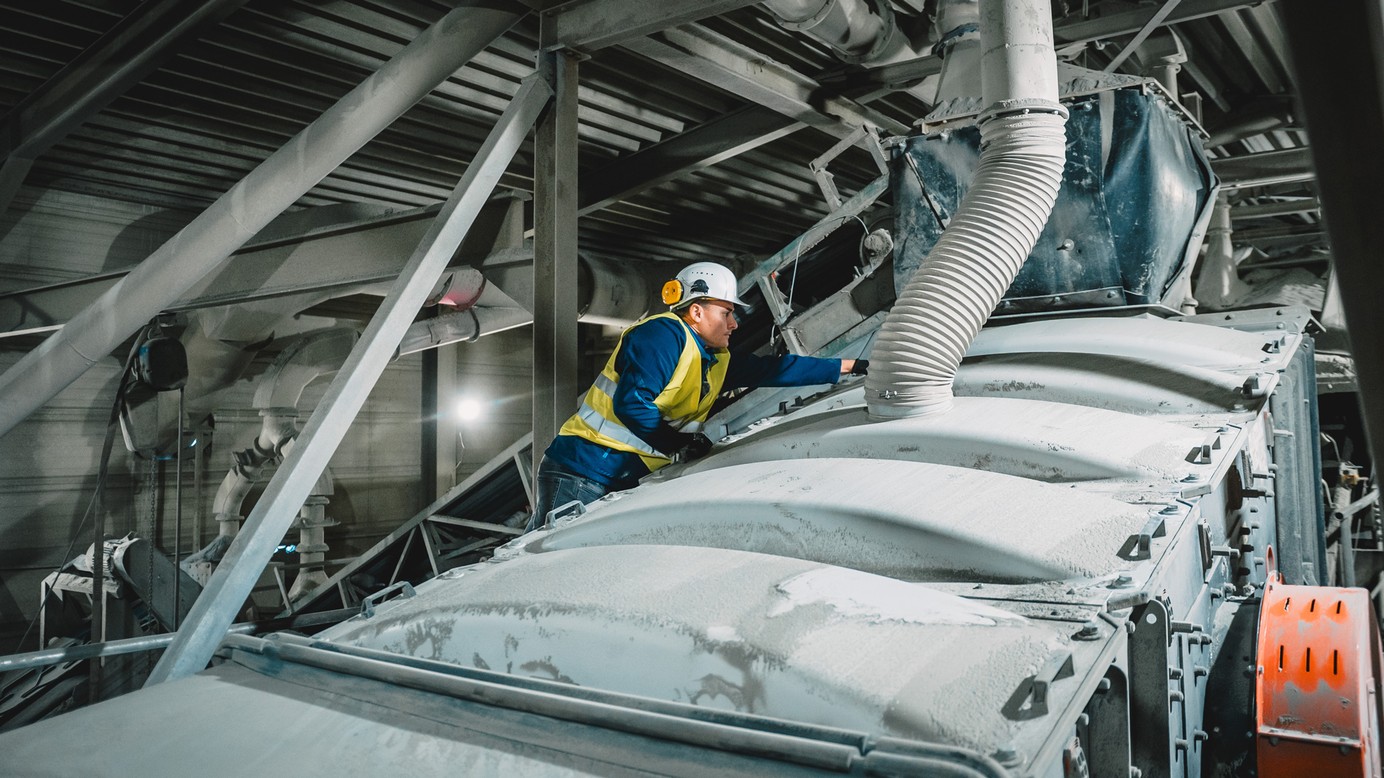
Meeting these requirements in a single solution takes more than selecting a lighter material. The composite panels combine a high strength-to-weight ratio and high dynamic flexural strength with corrosion resistance and good acoustic insulation. The  covers underwent laboratory testing in collaboration with the Department of Lightweight Structures and Polymer Technology at Chemnitz University of Technology. Sound power measurements on screens with and without material feed demonstrated their acoustic performance.
The lightweight covers are the visible result. Behind them is something less immediately apparent: the specialist materials knowledge, engineering expertise and collaboration needed to turn a specific customer challenge into a working solution.
How better answers take shape
An operating challenge rarely belongs to just one engineering discipline. A recurring maintenance issue might raise questions about materials or component design, while an unexpected wear pattern might require a deeper understanding of the application. Finding a better answer means bringing those perspectives together.
Product development, application engineering, materials expertise, manufacturing, testing, service and customer-facing teams all contribute different knowledge. Together, they connect the conditions in which equipment operates to the decisions made during development. That exchange can also change what teams look for in a solution.
 “By bringing different perspectives into product development, we can identify opportunities to reduce energy consumption, make better use of materials and components, or improve operational uptime,” says Pontus Alexandersson, VP Sustainable Business, Rock Processing. “These considerations aren’t separate from the performance a customer needs – they’re very much part of finding a better, overall solution.”
An idea that works in principle may still need refinement before it can withstand the demands of actual operation. Testing can reveal limitations, while customer feedback may challenge assumptions or point toward an opportunity not initially considered.
Innovation doesn’t end at launch, either. The experience gained as equipment is operated, maintained, and serviced creates new knowledge, which can influence the next design, improvement, or an entirely new approach.
At Sandvik, this combination of scientific knowledge, engineering expertise and close customer collaboration is central to how innovation progresses. In rock processing, it also has a direct bearing on our eco-efficiency ambitions. Improving productivity, reliability, and resource efficiency requires considering how new technologies and design decisions will perform throughout their working lives – not just whether they meet an immediate objective.
Innovation that earns its place in the operation
The next generation of rock processing will depend on increasingly sophisticated engineering and a deeper understanding of how equipment, materials and processes behave in real operating conditions.
For customers, the value of that work may be experienced in remarkably practical ways: a maintenance task that takes less time, more reliable information about equipment condition, or a solution designed around the demands of a particular operation.
That is the connection between innovation and eco-efficient rock processing: turning sophisticated engineering into improvements that help customers achieve better performance while making more efficient use of resources. And that’s how innovation helps reshape the future with eco-efficient rock processing.