
Circularity and resource efficiency: keeping value in motion

In rock processing, value depends on how effectively resources are used, recovered, and returned into circulation. Materials, components and equipment all carry value – and the longer that value remains in productive use, the more resource-efficient the operation becomes. This is where circularity and resource efficiency become central to eco-efficient rock processing operations.
As demand for minerals, infrastructure, and construction materials continues to grow, the industry faces a clear challenge: how to increase productivity and meet rising material demands while reducing waste, lowering environmental impact, and making better use of the resources already available. The answer lies in a broader shift in how materials are handled, how equipment is designed and maintained, and how value is preserved across the full lifecycle.
Circularity is often associated with recycling. But in practice, it starts much earlier – and reaches much further. Circularity is shaped by how materials are recovered, separated, and prepared for further use. It is also shaped by how products are designed, used, serviced, and rebuilt, and returned to operation. And it depends on close collaboration across customers, suppliers, and partners.
 “Circularity and resource efficiency are central aspects of eco-efficient rock processing, not least because they challenge us to think beyond single operations or individual products,” says Pontus Alexandersson, VP and Head of Sustainable Business, Rock Processing. “It’s about doing more with less in a very practical sense – keeping valuable materials and products in use, and working toward more circular value chains together with our customers.”
Recovering more value from material flows
In demolition and recycling operations, circularity can begin long before material reaches a recycling plant. Materials that could be treated as waste may instead be recovered, separated, processed, and prepared for new use. But this doesn’t happen automatically. The way material is handled early in the flow can determine what can be recovered, reused, or returned to circulation.
 Attachment tools are enablers in this process, performing some of the practical steps needed to make material recovery possible. Hydraulic breakers and demolition tools can be used to dismantle structures and reduce material to a suitable size. Pulverizers can crush concrete while separating it from reinforcing steel. Other attachments can cut steel for further processing, handle heavy components, or sort different material fractions.
These steps matter because material quality and separation can make recovery easier – or more difficult. Well-prepared material is easier to direct into the right recycling stream, while mixed or contaminated material is often harder to recover efficiently. In this sense, circularity is not defined only at the point of recycling. It is shaped much earlier – by how material is broken, separated, and prepared for what comes next.
The same principle applies broadly across rock processing operations. Crushing, screening, separation, and classification all play a decisive role in how efficiently materials can be processed and recovered. This makes circularity a practical part of the operational set-up: not only an environmental ambition, but a way to preserve value in the material flow.
Extending the life of products and components
Circularity also extends into the product lifecycle. Across Sandvik, refurbishment, rebuilding, service, and aftermarket support are important ways to reduce premature replacement while maintaining performance and reliability.
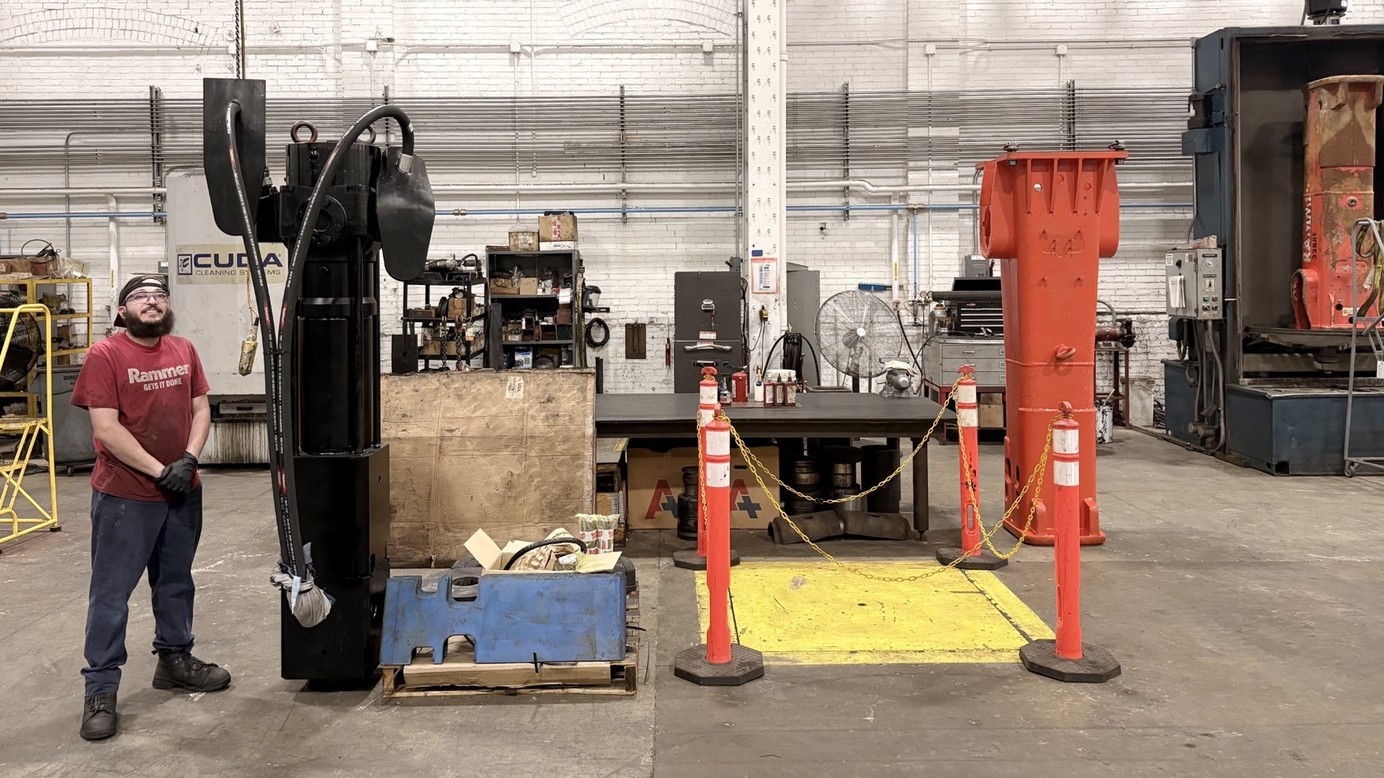
In Cleveland, USA, this is demonstrated through two circular business models for Rammer® hydraulic hammers. In the Renewed & Certified program, used hammers are bought back, fully refurbished, certified, and resold with warranty. This gives the product a second life and provides customers with a premium-quality alternative to new equipment. Through the Rebuild program, customers send in their existing hammer for inspection, repair, and rebuild. The hammer is carefully refurbished, tested and returned to service.
Both models are built around a circular principle: when components can be restored and reused, value is retained instead of lost.
“Instead of replacing an entire product, we restore and reuse major components wherever possible,” says David Cowen, Sales Manager North America. “This lowers customers TCO, extends product life, and ensures we keep valuable materials in use for longer.”
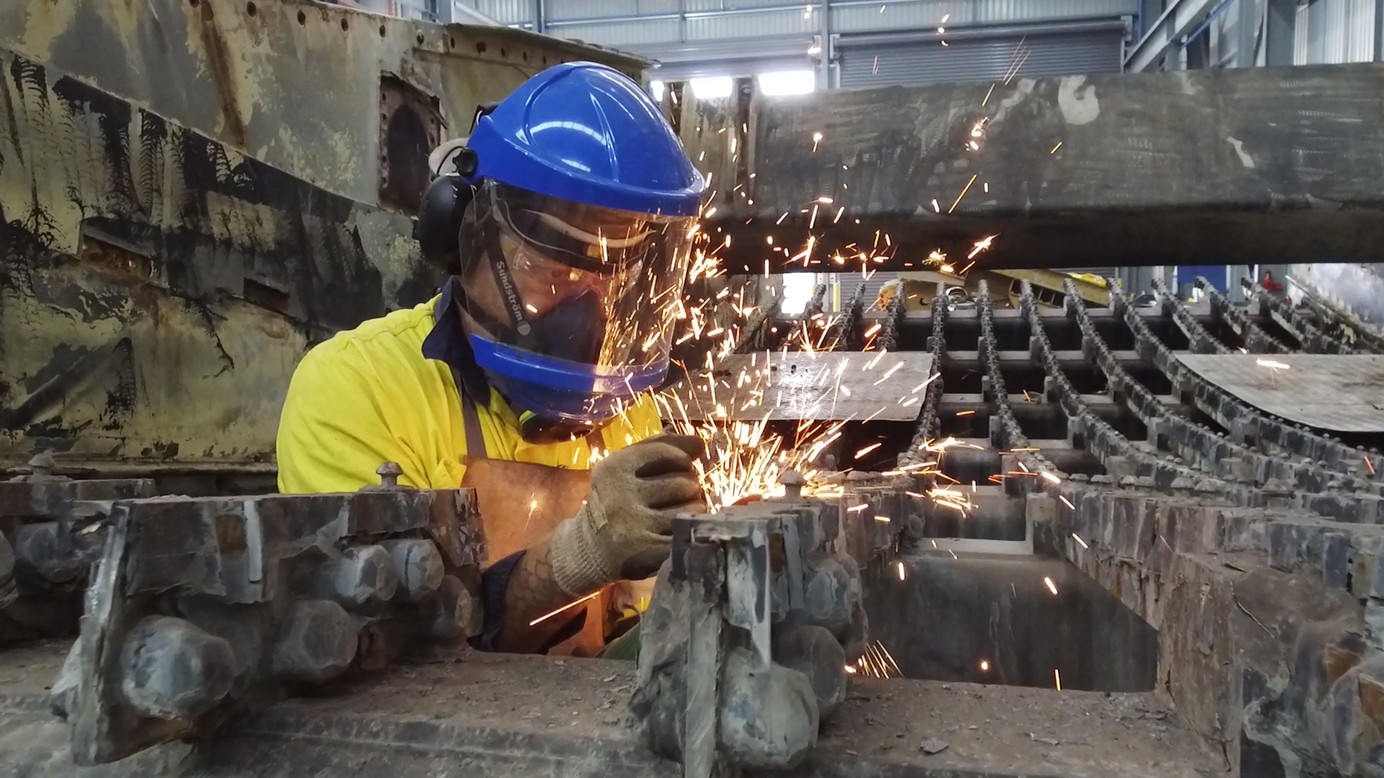
The same approach is present in various parts of business area Rock Processing – for instance at the site in Jandakot, Australia, where major mining equipment such as screens, feeders, and exciters are refurbished and restored, retaining value in existing equipment.
Product development also plays an important role. Durability, serviceability, energy efficiency, wear life, and ease of maintenance all influence how efficiently equipment performs over time. This includes designing products that are strong enough for demanding tasks, while considering operational efficiency. Since much of a product’s environmental impact can occur during use in customer operations, practical improvements in weight, performance, serviceability, or maintenance can improve efficiency across the lifecycle.
Returning material into production
Another important dimension of circularity is the ability to return material into production. At our foundry in Svedala, Sweden, worn mantles and concaves are collected, recycled, and reintroduced into the melting process to form new genuine wear parts. This means material from used components become part of the next generation – reducing the need for virgin raw material while maintaining quality and performance.
 This kind of closed-loop approach shows how circularity can be built directly into production, while highlighting the connection between eco-efficiency and customer value. For customers, returning worn parts into a controlled circular process can help reduce waste and environmental footprint. At the same time, the process ensures that the resulting components meet the quality and performance standards.
Circularity cannot come at the expense of reliability. In rock processing operations, performance, safety, and uptime are simply critical. That’s why resource efficiency must go hand in hand with engineering quality, process knowledge, and traceability. The objective isn’t simply to use recycled material. It is to use resources intelligently – without compromising the performance customers depend on.
A practical part of eco-efficient rock processing
Circularity and resource efficiency are not separate from productivity. Rather, they shape how productivity, sustainability, and customer value come together. In practical terms, this means helping customers get more value from every ton of material, every component, every machine, and every step of operation. It means reducing waste where possible, extending product life, reusing valuable material and creating business models that keep resources in circulation. It also means recognizing circularity is a shared effort. No single product, site, or company can create a truly circular value chain alone.
For us, this is a natural part of what it means to lead in eco-efficient rock processing. Electrification and digitalization help improve how energy and data are used. Process optimization helps improve how operations perform as a complete system. Circularity and resource efficiency help ensure that materials, components and equipment are kept in productive use for longer.
Together, all areas point in the same direction. The future of rock processing will not be defined by how much material is consumed, but by how much value can be created from the resources already in use. By recovering, recycling, and reusing more effectively – and keeping products and materials in motion for longer – circularity becomes a practical way to reshape the future with eco-efficient rock processing.